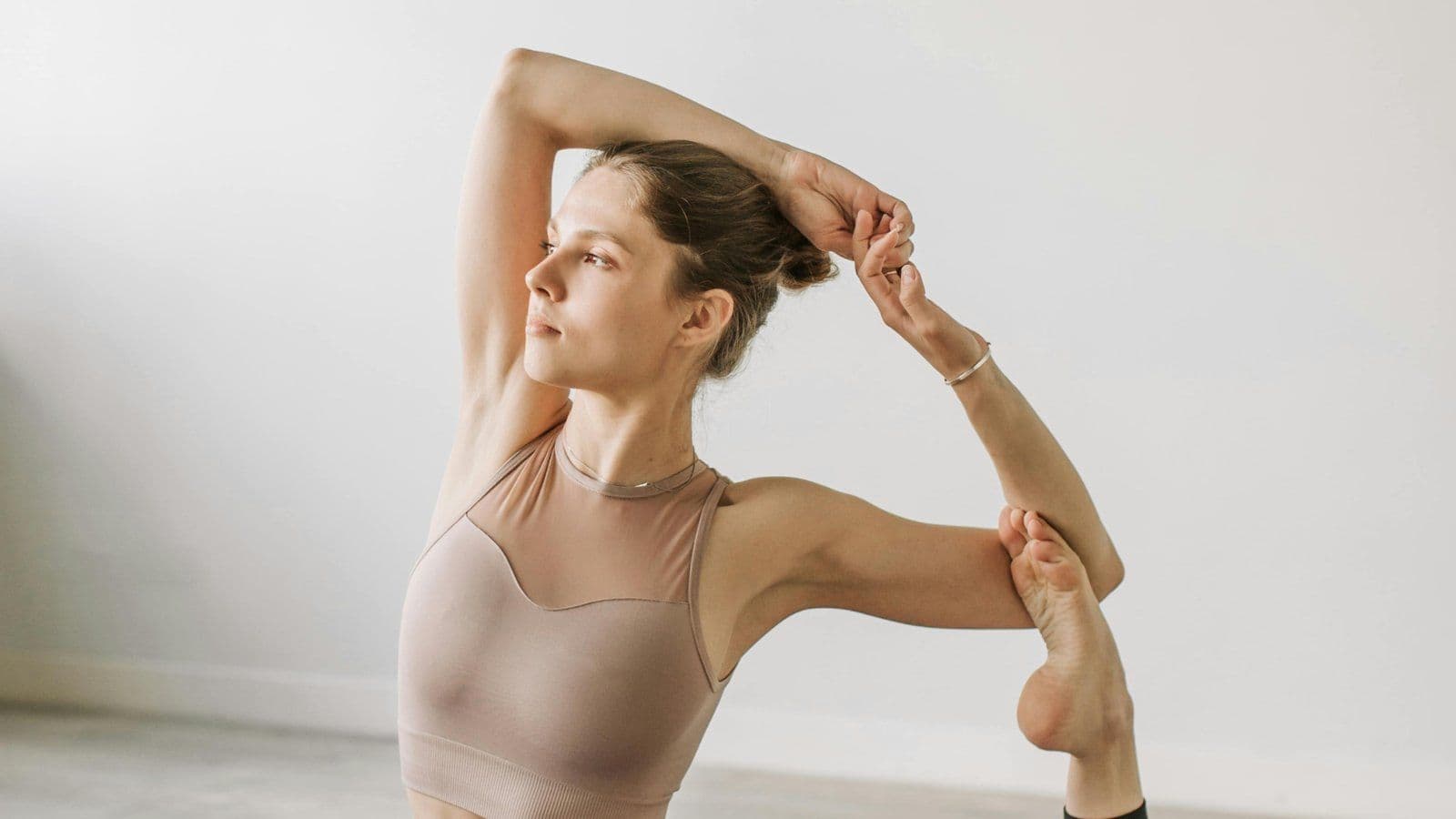
I thought yoga was for flexible people. Or for those who like zen atmospheres. Or for a certain type of person, who didn't really look like me. This is one of the most common misconceptions about this practice. And this is probably what prevented me for a long time from discovering the real benefits.
Yoga is today one of the most studied physical and mental practices in the world. Hundreds of randomized studies evaluate its effects on stress, blood pressure, back, sleep, depression, flexibility, strength and body awareness. What emerges from this research is much richer and more solid than its cultural image suggests.
1. What yoga really is, and its main forms
Yoga is a thousand-year-old discipline originating from India which integrates physical postures (asanas), breathing techniques (pranayama), relaxation and, depending on the school, meditation and philosophy. In the Western context, it is mainly postural yoga that is practical, with very different styles depending on the objectives.
| Yoga style | Characteristics | Who is it for? |
|---|---|---|
| Hatha yoga | Slow pace, held postures, accessible to beginners | Beginners, stressed people, seniors |
| Vinyasa / Flow | Dynamic sequence synchronised with breathing | Active people seeking cardio and fluidity |
| Yin yoga | Postures held 3 to 5 min, deep fascia work | People with chronic tension, recovery |
| Iyengar yoga | Anatomical precision, use of props, highly therapeutic | Chronic pain, rehabilitation, beginners |
| Restorative yoga | Supported postures, props, deep relaxation | Burnout, overwork, post-illness recovery |
| Ashtanga / Power yoga | Dynamic and intense, strength-based | People in good physical condition seeking a challenge |
2. What science says about the benefits of yoga
A Cochrane review and several recent meta-analyses have evaluated the effects of yoga on different dimensions of health. The best established conclusions:
- ●Stress and anxiety: yoga significantly reduces perceived stress and anxiety symptoms. A 2012 meta-analysis (Li and Goldsmith) of 35 randomized studies concluded that there was an average reduction of 40% in anxiety symptoms.
- ●Blood pressure: regular practice (3 sessions/week over 12 weeks) reduces systolic pressure by 5 to 10 mmHg in hypertensive subjects, an effect comparable to certain medications.
- ●Chronic low back pain: two reference randomized studies (Cramer et al., 2013; Tilbrook et al., 2011) show a significant reduction in pain and functional disability in low back pain patients practicing yoga.
- ●Sleep: yoga improves the subjective quality of sleep, reduces sleep onset latency and increases deep sleep time, with particularly marked effects in people suffering from insomnia.
- ●Flexibility and mobility: Improvements of 30 to 50% in measured flexibility are documented after 8 to 12 weeks of regular practice.
- ●Muscular strength: yoga postures work isometrically the muscles of the trunk, limbs and shoulders. Strength gains comparable to light strengthening are observed.
3. Yoga and the nervous system: the key effect
One of the most important mechanisms of yoga is its direct action on the autonomic nervous system, the set of nervous circuits that regulate involuntary functions (heart rate, digestion, breathing, stress hormones).
A sedentary lifestyle and chronic stress keep the sympathetic nervous system (alert, fight-flight mode) in hyperactivity. Yoga, and in particular its components of deep breathing and mindful postures, activates the parasympathetic nervous system (rest-digestion mode), what researchers call the relaxation response.
- ●Reduction in resting heart rate by 3 to 7 bpm after 12 weeks of regular yoga
- ●Increased heart rate variability (HRV), a key indicator of resilience to stress
- ●Reduction of salivary cortisol (marker of chronic stress) by 15 to 20%
- ●Improvement of the vagal response (vagus nerve), direct pathway for regulating stress and emotions
4. How to start yoga without preconceptionsThe first obstacle is often psychological: the conviction of not being flexible enough, young enough, patient enough, or available enough. Here's the truth: yoga can be done by everyone, including stiff people, seniors and those who have never exercised.
- ●Hatha yoga for beginners: this is the most accessible style. The postures are held there for longer, allowing time to understand and adjust. Face-to-face courses allow for personalized corrections.
- ●Online yoga: platforms offer beginner programs accessible from home (Yoga with Adriene, Glo, Ashtanga Yoga Project). 15 to 20 minutes a day is enough to start feeling the effects.
- ●Accessories: a sufficient mat. The bricks, straps and bolsters are optional and useful for adapting postures to your body shape, they are not reserved for beginners, they help them.
- ●Patience: the physical benefits of yoga are felt in 4 to 8 weeks. The mental benefits (stress, sleep) often begin in the first week. The progression is slow and non-linear, and that's exactly what makes this practice sustainable.
5. Yoga and health prevention: an integral vision
What distinguishes yoga from other physical activities is its integral approach: it simultaneously works the body, breathing and attention. This dimension of integrated mindfulness makes it a practice particularly suited to people who are stressed, mentally overloaded or in a period of convalescence.
In a health prevention approach, yoga can play the role of complement to cardio and muscle strengthening, or as a main practice for people whose health profile does not allow more intense activities. A health check allows me to identify the type of physical activity best suited to my profile, and for many, yoga is a perfectly suited answer.
💡 Tips to remember
- Yoga reduces on average by 40% anxiety symptoms and 15 to 20% salivary cortisol, effects comparable to those of certain drug treatments for mild forms of anxiety. clinically significant.
- I don't need to be flexible to do yoga: it is precisely through practice that flexibility develops. Yoga is not a reward for flexible bodies, it is the tool that creates them.
- Yoga activates the parasympathetic nervous system and increases heart rate variability, two key indicators of stress resilience and cardiovascular health.
- 15 to 20 minutes of yoga per day is enough to start feeling benefits on stress, sleep and flexibility. Regularity takes precedence over the duration of each session.