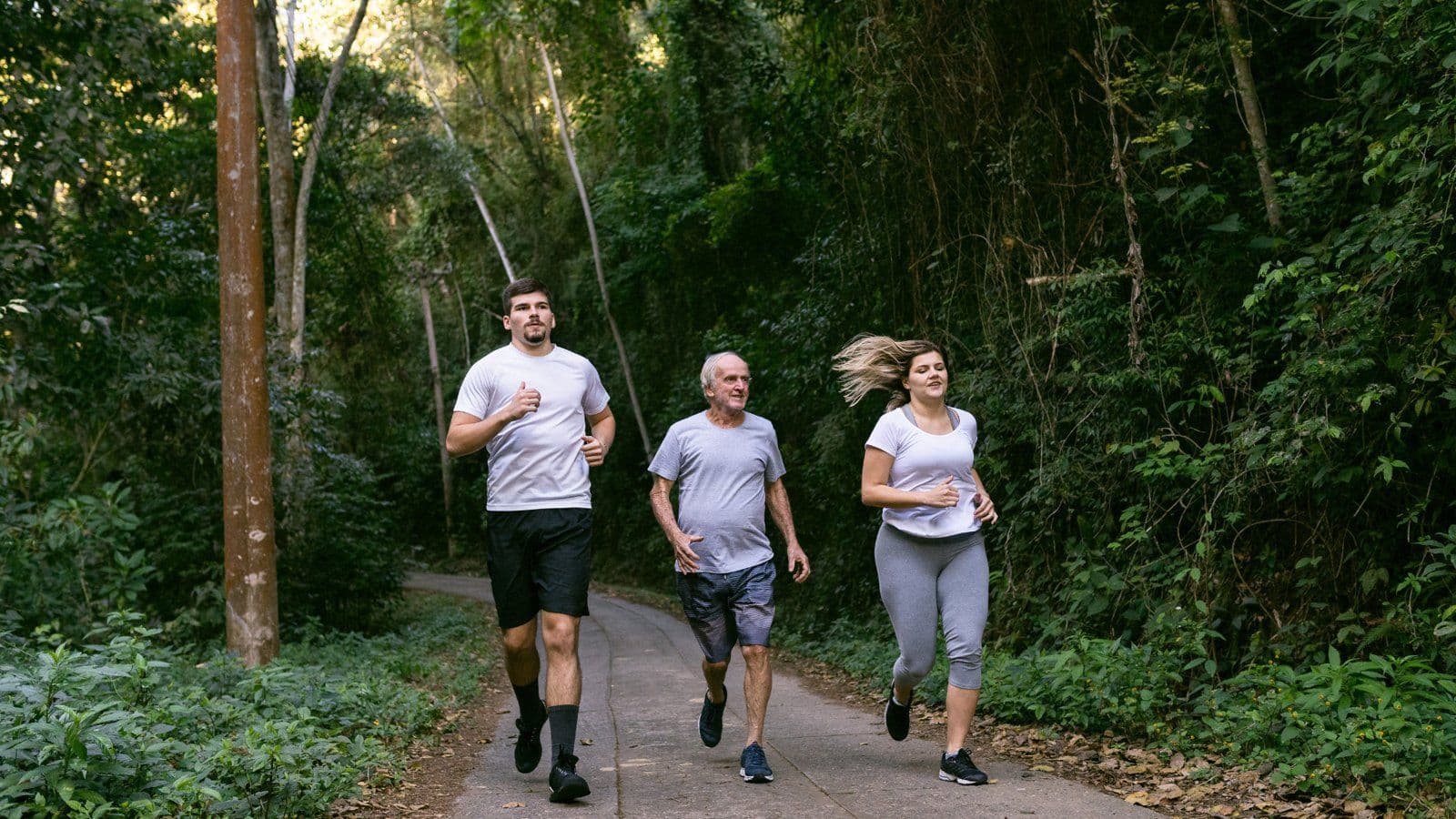
I can do exactly the same exercise in the gym or in nature, same duration, same intensity, same calorie expenditure. And yet, research consistently shows that exercising outdoors, and particularly in natural environments, produces greater effects on mental and emotional well-being than exercising in artificial environments.
This phenomenon, which researchers call green exercise, is today the subject of a solid scientific corpus. It revealed that nature is not just a pleasant setting for exercise: it is a therapeutic agent in its own right, whose effects are added to and combined with those of physical movement.
1. Green exercise: what science documents
A landmark meta-analysis published in Environmental Science & Technology (Barton & Pretty, 2010) involving 1,252 participants concluded that exercise in nature produced significant improvements in self-esteem and mood, independent of exercise intensity, with peak effects within the first 5 minutes.
| Benefit | Indoor exercise | Exercise in nature | Advantage of nature |
|---|---|---|---|
| Lower cortisol (stress) | Moderate | Strong | Nature speeds up recovery of the sympathetic nervous system |
| Improved mood | Moderate to strong | Strong | Longer-lasting and more marked effects in natural settings |
| Reduced rumination | Moderate | Strong | Forest settings reduce activity in the brain area linked to rumination (medial prefrontal cortex) |
| Self-esteem | Moderate | Stronger in the presence of water and nature | Added effect of natural beauty |
| Long-term adherence | Variable | Higher | Higher intrinsic enjoyment, lower perceived effort |
| Vitamin D | Absent | Present | Sun exposure during outdoor exercise |
2. The theory of attention restoration
Why does nature have these specific effects? Researchers Rachel and Stephen Kaplan developed the Attention Restoration Theory (ART), which offers a solid explanation.
Directed attention, the one I use to work, solve problems, filter out distractions, is a resource that is running out. Attentional fatigue manifests itself in difficulty concentrating, irritability, errors of judgment and increased sensitivity to stress. Nature restores this resource through a specific mechanism: involuntary attention.
- ●Involuntary attention (gentle fascination): natural elements, the movement of leaves, the sound of water, organic shapes, filtering light, captivate the attention without cognitive effort. This passive capture allows directed attention to recover.
- ●Psychological distance: nature creates a context perceived as different from everyday life, a mental break which facilitates distancing from concerns.
- ●Extent and coherence: natural environments offer sufficient visual richness to occupy the mind without saturating it, a quality that urban and artificial environments rarely reproduce.
3. The forest in particular: forest bathing (shinrin-yoku)
Shinrin-yoku (forest bathing) is a Japanese health practice which consists of slowly and consciously immersing oneself in the forest atmosphere, without any particular sporting objective. Japanese and European research on this practice is particularly remarkable:
- ●Reduction of cortisol: a 2-hour session in the forest reduces salivary cortisol by 12.4% on average, compared to 5.8% for a city walk of the same duration (Park et al., Environmental Health and Preventive Medicine 2010).
- ●Parasympathetic nervous system: phytoncides (volatile organic compounds emitted by trees) stimulate the parasympathetic nervous system, reducing heart rate and blood pressure.
- ●Immunity: inhalation of phytoncides for 2 days in the forest increases the activity of NK (Natural Killer) cells by 50%, an effect which persists up to 30 days after exposure (Li et al., 2008).
- ●Ruminations: a 90-minute walk in nature significantly reduces the activity of the medial prefrontal cortex (rumination zone), while a walk in the city does not produce this effect (Bratman et al., PNAS 2015).
4. The blue mind: the specific benefits of aquatic environmentsWater has its own therapeutic effects, independent of physical activity. The concept of blue mind, developed by marine biologist Wallace J. Nichols, describes the state of light calm, mental clarification and well-being that proximity to water produces.
- ●Seaside, lakes, rivers: a meta-analysis (Gascon et al., International Journal of Hygiene and Environmental Health 2017) on 35 studies shows that people living near water systematically present better mental health and well-being scores.
- ●Water sounds: the sound of running water (stream, waves) activates the brain's reward circuits and reduces the response of the sympathetic nervous system. Its effect on stress is rapid and measurable.
- ●Open water swimming: combines the therapeutic effects of water, nature and exercise. Preliminary studies suggest greater benefits on depression and anxiety than swimming in a pool.
5. How to integrate nature into my daily physical activity
No need for deep forest or ocean at your fingertips. Research shows that even modest exposure to nature produces measurable benefits:
- ●The neighborhood park: a study published in Scientific Reports (White et al., 2019) shows that spending at least 2 hours per week in nature is associated with better health and well-being scores, even in urban areas. A park, a garden, a tree-lined path count.
- ●Walking in nature as a ritual: replacing an indoor sports session with a walk in the forest or park once a week is enough to produce measurable restorative effects.
- ●Gardening: beyond being an effective NEAT activity, gardening combines the benefits of contact with the earth, nature and physical effort. Studies show a reduction in cortisol and an improvement in well-being comparable to a mindfulness session.
- ●Urban applications: identifying parks, forests and green spaces accessible in less than 30 minutes from your workplace or home allows you to easily integrate them into your weekly routine.
💡 Tips to remember
- Spend at least 120 minutes per week in nature, even an urban park, is associated with better overall health and well-being scores. The effect is measurable from 5 minutes of contact with nature.
- A 2-hour session in the forest reduces cortisol by 12.4% and increases the activity of NK immune cells by 50%. The forest is a medicine that can be administered freely.
- Walking in nature reduces activity in the rumination area of the brain, an effect that walking in the city does not produce. For circular thoughts, the forest is more effective than the treadmill.
- The sounds of running water activate the brain's reward circuits and reduce the stress response quickly and measurably. Running or walking near water amplifies the benefits.
- A health check allows you to assess indicators of stress and well-being, and to identify lifestyle adjustments, including regular exposure to nature, that are most beneficial for your profile.