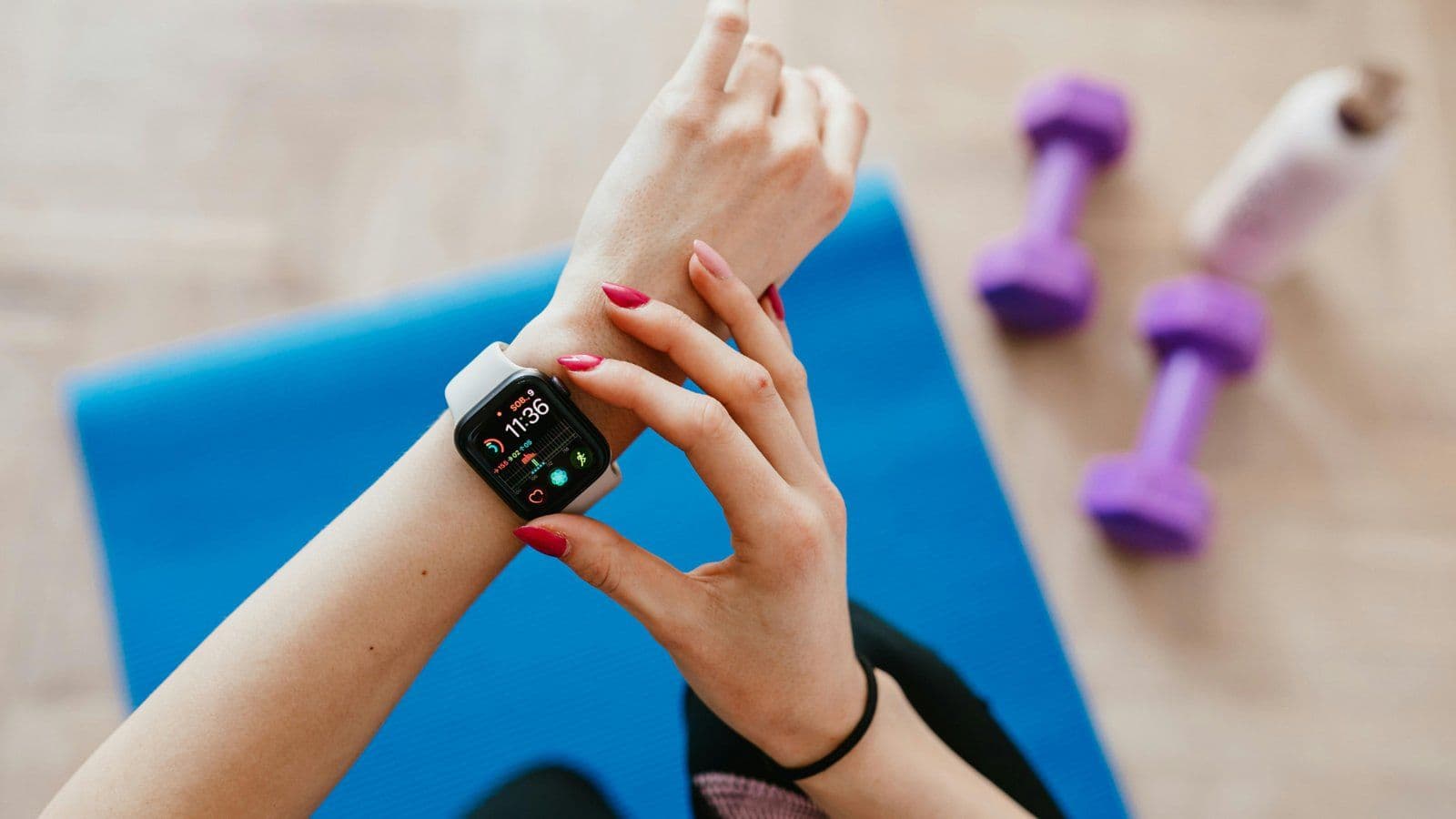
I wear a connected watch that counts my steps, measures my heart rate and alerts me when I'm too sedentary. I use an application that guides me during my sessions and tracks my progress. It's great, or it can be. Because the same technology that helps some people surpass themselves can push others towards exhaustion, toxic comparison or an anxious relationship with their own data.
The market for sports applications and connected health objects is booming: more than 350,000 health applications are available on the stores, and sales of connected watches and bracelets exceed 200 million units per year worldwide. Navigating this ecosystem with discernment is a health skill in its own right.
1. What connected tools can really bring
Used intelligently, applications and connected objects have documented benefits for sports practice:
| Benefit | Mechanism | Scientific evidence |
|---|---|---|
| Increased level of physical activity | Awareness of the data (steps, calories, active minutes) motivates progress towards goals | Meta-analysis: +2,000 steps/day on average among pedometer users (Bravata et al., JAMA 2007) |
| Consistency of practice | Reminders, streaks, gamification maintain behavioural commitment | Yes, especially in the first 6 months; the effect fades over time |
| Personalised progression | Apps adjust difficulty to performance, preventing plateaus | Moderate, depends on the quality of the algorithm |
| Objective measure of recovery | Resting heart rate, heart rate variability (HRV), sleep quality, useful data to adjust the load | Recent watches are reliable for HRV and resting heart rate |
| Social motivation | Challenges with friends, leaderboards, shared sessions, social reinforcement of the habit | Strong for people with extrinsic motivation |
2. The most useful data to track
Not all data generated by connected tools is equal. Here is a priority guide so as not to drown in numbers:
- ●Really useful data: resting heart rate (cardio fitness and recovery indicator), number of daily steps (proxy of total physical activity), sleep quality (duration and distribution of phases), heart rate variability (HRV, stress and recovery indicator), minutes of moderate to vigorous activity per week.
- ●Useful data with caution: calories burned (very imprecise, average error of 20 to 30% depending on the studies, trend indicator, no precision), estimated VO2max (approximate but useful for monitoring progress), recovery score (relative value, not absolute).
- ●Data to put into perspective: composite fitness scores which aggregate several metrics into one number, practical but simplifying. Oxygen saturation (SpO2), reliable at altitude or lung disease, limited for daily use. Stress score can amplify anxiety if interpreted as a threat.
3. Traps and derivatives to know
Connected tools are not psychologically neutral. Research in behavioral psychology identifies several potential derivatives:
- ●Exercise orthorexia (exercise addiction): gamification and daily objectives can push certain profiles towards a compulsive relationship with physical activity, inability to rest, anxiety when an objective is not achieved, activity despite injuries or extreme fatigue.
- ●Extrinsic motivation that stifles the intrinsic: research shows that over-tracking can reduce the intrinsic pleasure of the activity. When every step is counted and every session evaluated, physical activity becomes a performance to be optimized rather than a pleasure to experience.
- ●Toxic social comparison: rankings between friends and social challenges stimulate some people, and create a feeling of inadequacy in others. Comparing yourself to more experienced practitioners demotivates rather than inspires.
- ●Imprecision as a source of anxiety: the sleep data from watches (notably the phases) are still imprecise. Interpreting them as an absolute reality can create sleep-related anxiety (orthosomnia) which degrades actual sleep quality.
4. Selection guide: which app or tool for which need?
| Need | Recommended tool | Why |
|---|---|---|
| Getting started with running | Couch to 5K, Nike Run Club beginner | Structured, gradual, supportive programme, ideal for beginners |
| Tracking cardio progress | Garmin Connect, Apple Fitness+, Polar Flow | Reliable data on heart rate, VO2max, training load |
| Motivation and daily consistency | Strava (community), Fitbit app, Apple Activity Rings | Gamification, social challenges, smart reminders |
| Yoga and meditation | Down Dog, Glo, Insight Timer | Structured, adaptable programmes with no performance pressure |
| Recovery tracking | Whoop, Oura Ring, HRV4Training | HRV and recovery at the core, less performance-focused |
| Nutrition around exercise | MyFitnessPal, Cronometer | Tracking intake, macros, hydration, to be used in moderation |
| Overall activity (NEAT) | Simple pedometer or the phone's built-in app | No subscription, effective, no data overload |
5. Use connected tools in a healthy way: the principles
The healthy relationship with connected sports tools is based on a few simple but fundamental principles:- The tool at the service of habit, not the opposite: the application must facilitate my practice, not become the condition or the purpose. If I avoid exercising because I don't have my watch, that's a red flag.
- ●Days without measurement: regularly allow yourself sessions or days without a tracker. Recognizing how I feel in my body without digital mediation is an important body awareness skill.
- ●The trend rather than one-off data: data is useful over weeks and months, not over one session or one night. A poor sleep measurement does not mean a bad night; a downward trend in HRV over 2 weeks deserves attention.
- ●The objective of process rather than result: track the number of sessions carried out, active minutes per week, not just calories or kilos. These process indicators are more under my control and less anxiety-inducing.
A health check remains the reference for an objective assessment of one's physical condition, independently of the data generated by connected objects, the precision of which is variable and the interpretation often simplistic.
💡 Tips to remember
- Wearing a pedometer increases the average number of daily steps of 2,000, the equivalent of 20 minutes of additional walking per day, without additional conscious effort.
- Calories burned estimated by connected watches have a margin of error of 20 to 30%. Using them as a trend is useful; taking them as absolute precision is misleading.
- Over-tracking can reduce the intrinsic pleasure of physical activity. Allowing yourself sessions without a watch or app maintains the pleasure of movement for its own sake.
- The most reliable and useful data from connected watches: resting heart rate, heart rate variability (HRV) and minutes of moderate to vigorous activity per week.
- A health check remains the reference for an objective assessment of one's physical condition, it complements the data from connected objects without being biased.