Every fall, the same story repeats itself: colds that come one after another, stubborn tonsillitis, fatigue that's difficult to explain. It's a seasonal inevitability, I told myself for a long time. However, the science of immunonutrition - the study of the links between diet and the immune system - has made considerable advances in recent years. The conclusion is clear and encouraging: yes, what I eat directly influences the quality and effectiveness of my immune defenses. And the adjustments to be made are often simple, accessible and without side effects. I offer you a caring exploration of this fascinating link.
1. The immune system: an organ that nourishes itself
The immune system is not a single organ but a complex network of cells, tissues and molecules distributed throughout the body. To function optimally, it has specific and important nutritional needs:
- ●Immune cells (lymphocytes, macrophages, NK cells) divide and proliferate rapidly during an infection. This intensive multiplication consumes a lot of proteins, vitamins and minerals.
- ●The production of antibodies requires specific amino acids, notably glutamine and cysteine, as well as zinc and B vitamins.
- ●The first-line inflammatory response mobilizes essential fatty acids (omega-3 in particular) for the synthesis of mediators of inflammation and its resolution.
- ●The mucosal barrier (intestine, lungs, skin) constitutes the first line of defense against pathogens. Its integrity depends on vitamin A, vitamin C and zinc.
Insufficient or unbalanced nutrition weakens these defense mechanisms. Conversely, a well-constructed diet strengthens them in the long term - without this implying taking tons of food supplements.
| Nutrient | Immune role | Best Food Sources |
|---|---|---|
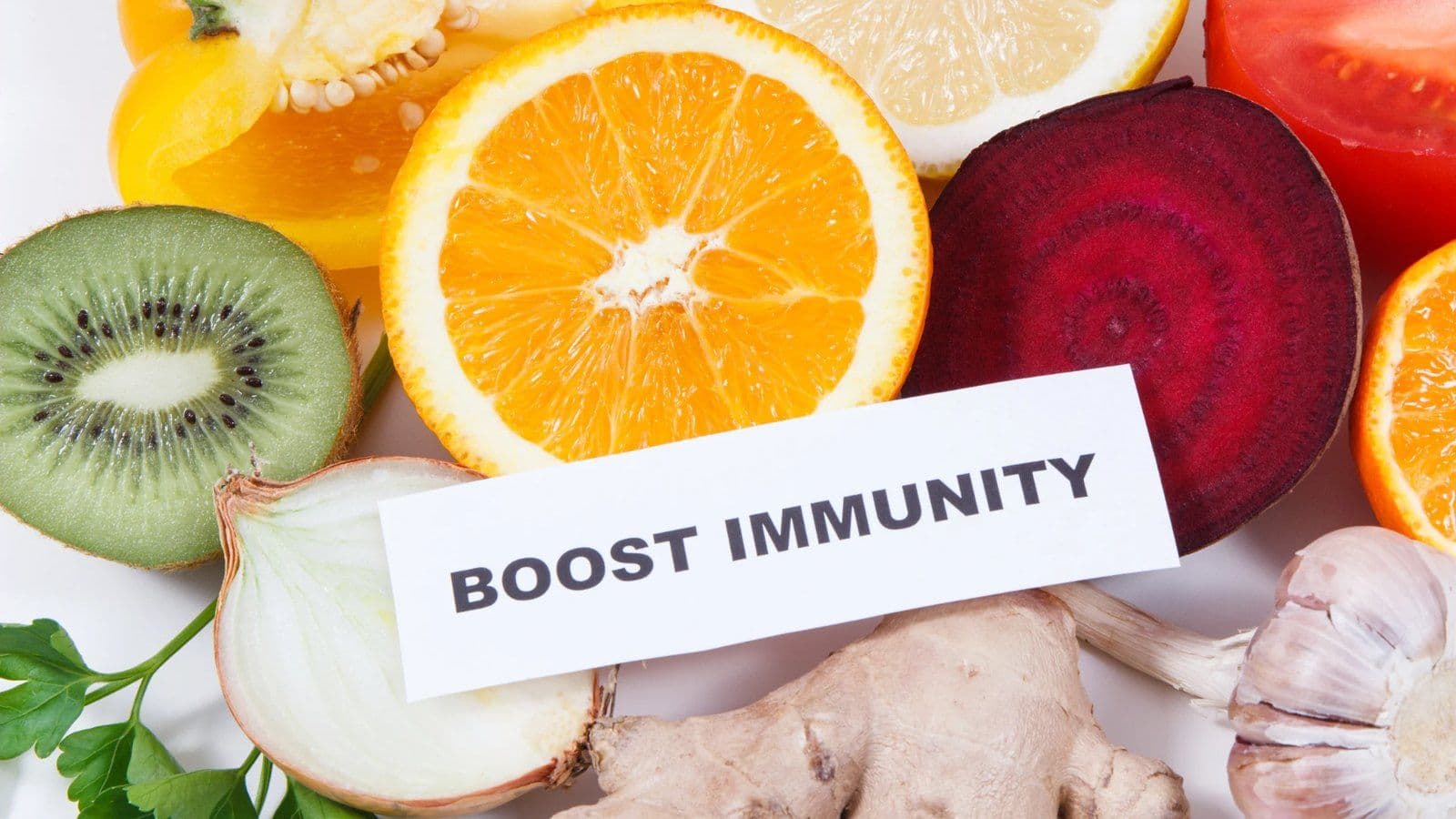
| Vitamin C | Stimulates the production and function of phagocytes and lymphocytes. Antioxidant protective of immune cells. Strengthens the epithelial barrier. | Red pepper (190 mg/100g), kiwi, citrus, broccoli, strawberry, fresh parsley |
| Vitamin D | Module it innate and adaptive immune response. Stimulates the production of antimicrobial peptides. Its deficiency increases the risk of respiratory infections. | Oily fish, egg yolk, sun exposure. Supplementation recommended in winter. |
| Zinc | Essential for the development and function of immune cells. Antiviral. Its deficiency causes thymus atrophy and a reduction in T lymphocytes. | Oysters, beef, pumpkin seeds, cashews, legumes, whole grains |
| Selenium | Cofactor of antioxidant enzymes. Regulates the immune response and the production of antibodies. | Brazil nuts (2 nuts/day = needs covered), fish, poultry, eggs |
| Iron | Essential for the proliferation of immune cells. Its deficiency reduces the response to infections. | Moderate red meat, legumes + vitamin C, pumpkin seeds |
| Omega-3 EPA/DHA | Precursors of resolvins and protectins, molecules that resolve inflammation. Modulate the immune response. | Oily fish twice a week, rapeseed oil, nuts |
| Proteins | Provide the amino acids needed for the synthesis of antibodies and immune cells. | Meat, fish, eggs, legumes, dairy products |
| Vitamins A and E | Maintaining the integrity of mucosal barriers (intestine, lungs). Protective antioxidants. | Carrots, sweet potato, spinach (A), olive oil, oilseeds, wheat germ (E) |
3. The intestine: the commander of my immunity
A fundamental fact that we often forget: around 70% of the body's immune cells are concentrated in the intestinal wall. The intestine is the body's primary immune organ.
This anatomical reality means that the health of my intestine - and more particularly of my intestinal microbiota - is directly linked to the quality of my immune defenses. A microbiota diversifies and balances:
- ●Constantly trains and regulates the immune system, teaching it to distinguish pathogens from harmless substances
- ●Produces short-chain fatty acids (butyrate in particular) which strengthen the integrity of the intestinal barrier and prevent leaky gut syndrome
- ●Inhibits the proliferation of pathogenic bacteria by competition and production of bacteriocins
- ●Modulates the systemic inflammatory response, reducing chronic low-grade inflammation
To nourish and maintain this beneficial microbiota, I rely on prebiotic fibers (garlic, onion, leek, Jerusalem artichoke, green banana, legumes) and probiotic fermented foods (plain yogurt, kefir, raw sauerkraut, kimchi).
4. Foods that weaken my immunity
Just as certain foods strengthen my defenses, others weaken them. Recognizing them allows me to make informed choices in times of vulnerability:
- ●Excess sugar: high consumption of refined sugars temporarily inhibits the function of phagocytes - the immune cells that engulf and destroy pathogens. Studies have shown that consuming 100 g of sugar (the equivalent of two glasses of soda) reduces the phagocytic capacity of white blood cells for several hours.
- ●Alcohol: it disrupts the production and function of immune cells, alters the mucosal barrier of the intestine and respiratory tract, and increases the risk of bacterial and viral infections.
- ●Ultra-processed foods: their richness in additives, refined oils and sugars, combined with their lack of fiber and micronutrients, depletes the microbiota and weakens the intestinal barrier.
- ●Protein deficits: in the event of severe protein restriction, the synthesis of antibodies and the proliferation of lymphocytes are compromised. Protein malnutrition is one of the leading causes of immunodeficiency worldwide.
5. My anti-infection food program for fall-winter
Here is how I adjust my diet as I enter the winter period to naturally support my immune system:
- ●I maintain my vitamin C intake throughout the winter: citrus fruits, kiwis, raw peppers, steamed broccoli. Vitamin C is water-soluble and oxidizes quickly: raw or lightly cooked vegetables and fruits are the best sources.
- ●I start a course of vitamin D from October to April: 800 to 1,000 IU per day, in the form of D3 (cholecalciferol). It is the winter supplement most recommended by ANSES.
- ●I consume 2 Brazil nuts per day: they alone cover the daily needs of selenium, an essential cofactor of immune antioxidant enzymes.
- ●I integrate garlic and ginger into my cooking: their richness in allicin (garlic) and gingerols (ginger) gives them antiviral and immunostimulating properties documented in several clinical studies.
- ●I take care of my microbiota: natural yogurt or kefir every day, portions of legumes twice a week, varied and seasonal fruits and vegetables. A healthy microbiota is a well-trained immune system.
- ●I maintain sufficient hydration: the respiratory and digestive mucous membranes - the first barriers against pathogens - dry out and become permeable in the event of dehydration.
I would like to remind you that no food or supplement can replace a balanced immune system that is built over the long term. The key is regularity and diversity of diet, not the search for a miracle food that would boost immunity in 3 days.
💡 tips to remember
- 70% of my immune cells are in my intestine: taking care of my microbiota with prebiotic fibers and fermented foods directly strengthens my defenses.
- Key nutrients for immunity are vitamin C, vitamin D, zinc, selenium, iron, omega-3 and protein. A varied and colorful diet covers most needs.
- I start my vitamin D treatment in October: 800 to 1,000 IU of D3 per day until April. This is the winter immunity gesture most recommended by ANSES.
- 2 Brazil nuts per day cover the needs for selenium: the most forgotten nutrient for immunity. A tiny gesture, a real impact.
- Excess sugar inhibits phagocytes for several hours: reducing sugary drinks and refined sugars during periods of infections is a concrete and effective gesture.
- Garlic and ginger in my dishes in winter: their antiviral and immunostimulating properties are documented. A curry, a soup, a wok with generous doses of garlic and ginger is an excellent strategy.
- No food boosts immunity in 3 days: it is regularity and dietary diversity over the long term that build solid defenses. Patience and consistency are my best medicines.