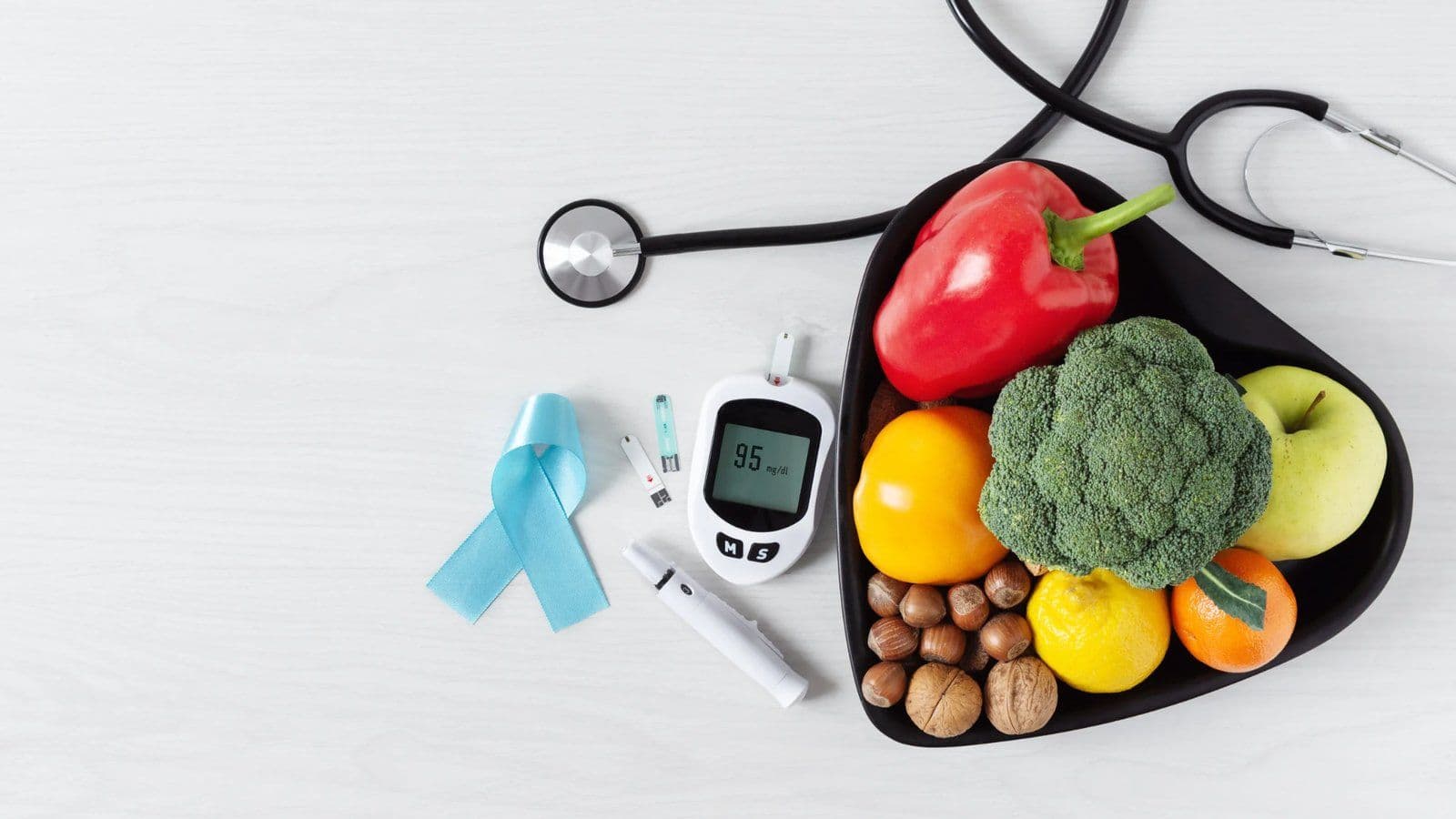
Diabetes affects millions of people in France, and many more are still unaware of it. But behind this word hide distinct realities: type 1, type 2 and prediabetes. Understanding what differentiates them is essential, because the means of action are not the same.
1. The common point: hyperglycemia
All diabetes is characterized by an excess of sugar in the blood: chronic hyperglycemia. Glucose, the body's main fuel, is regulated by insulin, a hormone produced by the pancreas. When this system becomes disrupted, blood sugar levels rise sustainably.
2. Type 1 and type 2: two distinct mechanisms
| Type 1 | Type 2 | |
|---|---|---|
| Mechanism | Lack of insulin (autoimmune) | |
| Often young | Often young | Often after 40 years |
| Proportion of cases | Approximately 10% | Approximately 90 % |
| Prevention | Not avoidable | Largely avoidable |
Type 1 results from destruction of insulin-producing cells: it requires lifelong insulin treatment. Type 2, by far the most common, results from progressive insulin resistance, often linked to lifestyle.
3. Prediabetes: the window of action
Before type 2 diabetes, a phase of prediabetes often sets in: blood sugar levels are higher than normal, without reaching the diabetes threshold. This is a key step, because it is reversible: acting at this stage can prevent the progression to diabetes.
4. Why this distinction matters
Confusing these forms leads to misconceptions. Type 2 and prediabetes are largely preventable through lifestyle, while type 1 cannot be avoided. This distinction also guides monitoring and treatment.
Knowing your situation, thanks to a simple blood sugar measurement, is the first step: you can only act on what you know.
💡 tips to remember
- All diabetes is characterized by chronic hyperglycemia, linked to a dysregulation of insulin produced by the pancreas.
- Type 1 (about 10% of cases) results from a lack of insulin and requires lifelong treatment; it is not preventable.
- Type 2 (around 90% of cases) results from insulin resistance, often linked to lifestyle, and is largely preventable.
- Prediabetes is a reversible phase: acting at this stage can prevent the transition to type 2 diabetes.
- A simple blood sugar measurement allows you to know your situation : we can only act on what we know.
Further reading