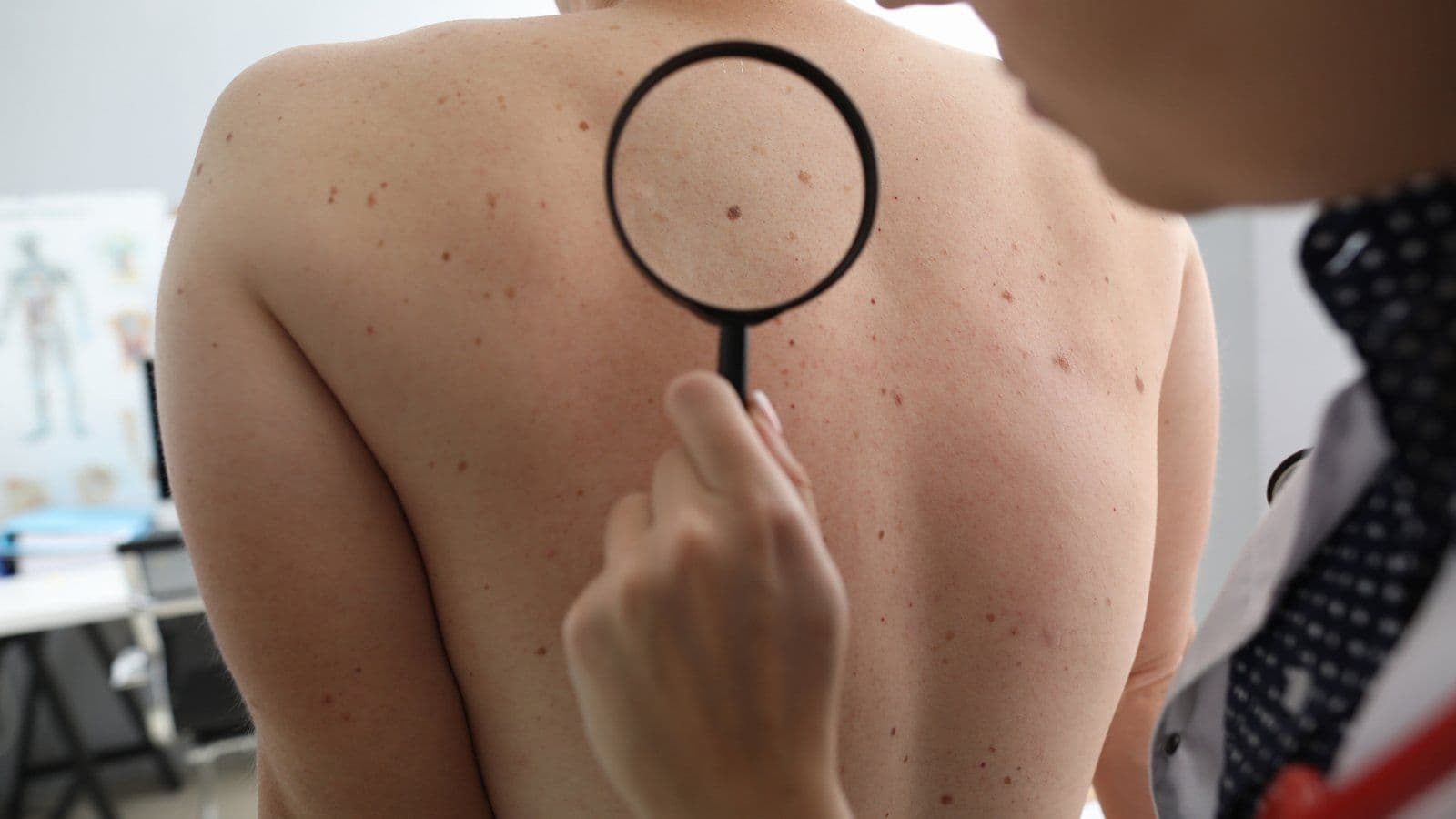
We often imagine that spotting skin cancer is the dermatologist's job. The reality is different: most melanomas are first noticed by the person themselves or by a loved one. The reason is simple: a melanoma usually causes neither pain nor itching. It signals itself through a visible change, a mole that evolves, a new spot. You just have to get into the habit of looking. Skin self-examination is precisely that habit, simple and free, that can change everything.
1. Why self-examination is so effective
The value of examining yourself comes down to two things. First, you see your skin far more often than any doctor: you're best placed to notice what changes. Second, by observing regularly, you get familiar with your moles and spots, to the point of immediately spotting the intruder. Self-examination doesn't replace the consultation: it triggers it at the right moment, when a lesion deserves a professional opinion.
2. How often to do it
The French recommendations are clear: a self-examination every 3 months, particularly if you have risk factors (fair phototype, more than 50 moles, personal or family history of melanoma, childhood sunburn, immunosuppression). For those same people, an annual exam by a dermatologist or GP completes the monitoring. Without particular risk factors, two to three self-examinations a year are enough to keep an eye out.
3. The complete method, step by step
Settle into a well-lit room, get a full-length mirror and a hand mirror, and undress completely. Then proceed in order, always the same:
- ●Facing the mirror, look at the face, neck, shoulders, chest and stomach.
- ●Raise your arms and inspect the sides, then the inside and outside of the arms and forearms.
- ●Examine the hands: palms, backs, spaces between fingers and under the nails.
- ●Seated, look at the front and back of the legs, then the feet: tops, soles, between the toes and nails.
- ●Using the hand mirror, inspect the nape, back, buttocks and backs of the thighs, or take photos.
- ●Finish with the scalp, parting the hair, and with the genital areas.
4. The areas we forget (and how to inspect them)
It's'often the neglected corners that harbour the lesions diagnosed too late. Here is the checklist of areas never to skip:
| Area to inspect | How to do it / tip |
|---|---|
| Scalp | Part the hair with a hairdryer (cool air) or ask for help. An area often neglected because hidden by hair. |
| Face, ears, neck | With the hand mirror, not forgetting behind the ears and the hairline. |
| Back, shoulders, nape | Turn your back to a wall mirror and observe with a hand mirror, or take photos / ask a loved one. |
| Hands, nails, between fingers | Palms, backs of the hands and especially under the nails: a melanoma can hide there. |
| Soles of the feet, between the toes | The classic site of acral melanoma, almost never sun-exposed and yet at risk. |
| Folds, genital areas | Groin, buttocks, genitals: little exposed but to be checked at least once. |
5. What to look for, and when to consult
Two simple markers guide your observation:
- ●The ABCDE rule: Asymmetry, irregular Borders, uneven Colour, Diameter often over 6 mm, recent Change. A single criterion is enough to justify an opinion.
- ●The "ugly duckling": in the same person, moles tend to look alike. The one that stands out, by shape, size or colour, should draw attention.
- ●The warning signals: a mole that changes, itches, bleeds, becomes raised or won't heal warrants a consultation without delay.
At the slightest doubt, don't stay alone with your worry: show the lesion to a professional. And remember that your health check-up is the ideal moment to take stock of your skin and organise, if needed, suitable monitoring.
💡 Key tips
- Most melanomas are spotted by the person themselves or a loved one, not by the doctor. Your eyes, and those around you, are the first line of screening.
- The trap: waiting for a symptom. A melanoma usually causes neither pain nor itching; it's'a purely visual change. You spot it by looking, not by waiting for it to show itself.
- Examine yourself every 3 months, always in the same conditions (same lighting, same mirrors). A few dated photos on your phone make any change obvious from one time to the next.
- The areas we forget, scalp, soles of the feet, between the toes, under the nails, genital areas, are precisely where the most late-diagnosed melanomas hide. Don't skip them.
- If a lesion worries you, a clear photo (an overview plus a close-up) sent to a dermatologist is a recognised way to be steered faster. Better to show it for nothing than to let it slip by.