A busy day, a tense meeting, an overflowing agenda... and there, almost automatically, I find myself looking for something to snack on. Sugar, fat, something comforting. This reflex is profoundly human and deserves no guilt: it reflects real biological mechanisms between stress and diet. But what I eat can also have a positive impact on my stress level and my mood. The relationship between diet and mental well-being is a growing avenue of research, and recent findings are encouraging. I suggest you explore them together, gently and without judgment.
1. The biological link between diet and mood
The relationship between what I eat and how I feel is not just a metaphor. It is based on well-identified biological mechanisms, notably via the gut-brain axis.
- ●Serotonin, the neurotransmitter of well-being: approximately 90 to 95% of the body's serotonin is produced in the intestine, not in the brain. Its synthesis depends directly on tryptophan, an essential amino acid provided by food. An insufficient intake of tryptophan can therefore directly affect serotonin availability and, by extension, mood and resilience to stress.
- ●Cortisol and nutrients: stress activates the hypothalamic-pituitary-adrenal axis and increases cortisol secretion. This stress response consumes more of certain micronutrients - notably magnesium, vitamin C and B vitamins - depleting reserves if diet does not compensate.
- ●Inflammation and mood: a diet rich in ultra-processed foods, refined sugars and saturated fats promotes low-grade systemic inflammation. This inflammation is now recognized as a factor in depression and anxiety disorders, via its effects on the metabolism of neurotransmitters and on the gut-brain axis.
- ●The microbiota, a major player: intestinal bacteria produce neurotransmitters, short-chain fatty acids and molecules that communicate directly with the brain via the vagus nerve. An imbalanced microbiota - particularly through a diet low in fiber and rich in ultra-processed foods - is associated with an increase in perceived stress and anxiety symptoms.## 2. How stress influences my food choices
Before we talk about foods that help manage stress, it's helpful to understand why stress naturally pushes us toward bad choices:
- ●Cortisol increases cravings for sugar and fat: in stressful situations, the body seeks quick sources of energy. The brain under cortisol preferentially orients towards foods with high energy density - sugar, fat, salt - which activate the dopaminergic reward system.
- ●Stress compresses perceived time: under pressure, I no longer feel like I have time to cook. I fall for quick solutions - online ordering, vending, fast food - which are rarely the most nutritious.
- ●Stress disrupts eating patterns: skipping meals, eating at any time, swallowing while working. These behaviors disrupt blood sugar levels and paradoxically worsen fatigue and irritability.
- ●Stress-related fatigue reduces decision-making abilities: Neuroscience studies show that cognitive fatigue increases the tendency to make impulsive food choices and reduces the use of conscious eating behaviors.
Understanding this circle is already a first step in getting out of it. It's not a question of blaming yourself for having indulged in chocolate on a stressful evening, but of understanding the mechanism to be able to influence it at the margins.
3. Foods that support my mental balance
| Food | Active nutrient | Benefit on stress and mood |
|---|---|---|
| Oily fish (salmon, sardine, mackerel) | Omega-3 EPA and DHA | Reduction of inflammation. Several meta-analyses show a beneficial effect of omega-3 on depressive symptoms and anxiety. |
| Walnuts, almonds, hazelnuts | Magnesium, Omega-3 ALA, Vitamin E | Magnesium modulates the stress response via the hypothalamic-pituitary-adrenal axis. Its deficiency amplifies reactivity to stress. |
| Avocado | Magnesium, potassium, vitamin B6, monounsaturated fatty acids | Supports the synthesis of neurotransmitters. Potassium helps regulate high blood pressure caused by stress. |
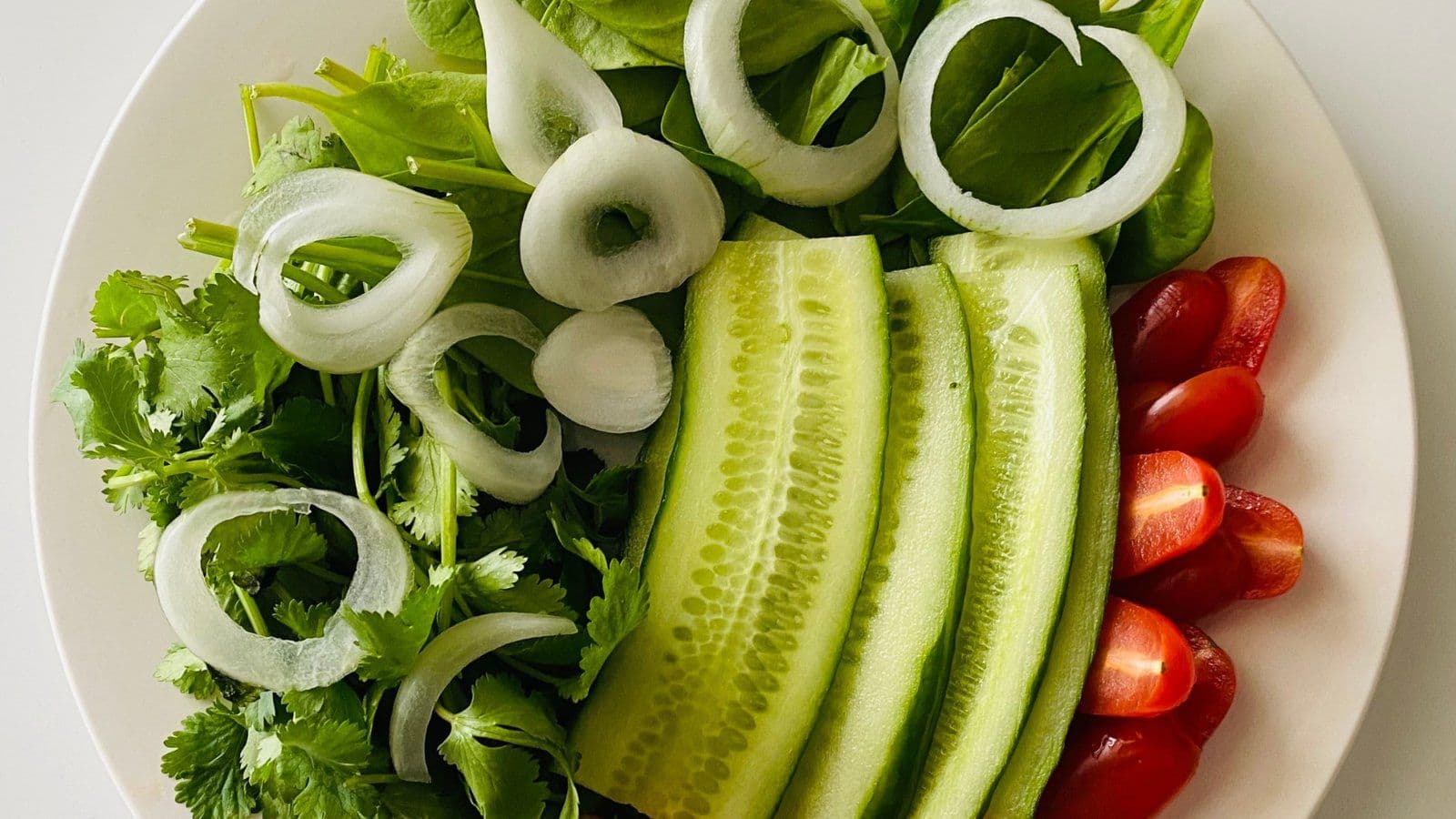
| Green leafy vegetables (spinach, broccoli) | Magnesium, folate, vitamin C | The Folates participate in the synthesis of serotonin and dopamine. Vitamin C reduces cortisol levels after acute stress. |
| Plain yogurt, kefir | Probiotics, proteins, tryptophan | Probiotics positively modulate the gut-brain axis. Kefir is associated with a reduction in anxiety in several studies. |
| Banana | Tryptophan, vitamin B6, potassium, magnesium | B6 is a cofactor in the synthesis of serotonin from tryptophan. Stable and gentle energy. |
| Dark chocolate 70% minimum | Flavanols, magnesium, tryptophan | Reduces cortisol and adrenaline after acute stress according to a study published in Journal of Proteome Research (2009). Stimulates the release of endorphins. |
| The green | L-theanine, antioxidants | L-theanine promotes relaxation without drowsiness by increasing alpha brain waves. Synergistic effect with caffeine for calm alertness. |
4. Foods that aggravate stress: identify them without feeling guilty
Certain foods, consumed regularly, can amplify the stress response and weaken emotional balance. Identifying them helps me make more informed choices - without banishing them completely:
- ●Alcohol: although it may seem relaxing in the short term, alcohol disrupts sleep, increases anxiety the next day (rebound effect), and depletes reserves of B vitamins and magnesium. Its regular consumption is associated with an increased risk of depression.
- ●Excess caffeine: beyond 3 to 4 cups per day, caffeine can amplify symptoms of anxiety, increase heart rate and disrupt sleep - three factors that worsen vulnerability to stress.
- ●Ultra-processed foods: their frequent consumption is associated in several studies with an increased risk of depression. Their depletion in fiber, omega-3 and micronutrients, combined with their richness in additives and sugars, weakens the microbiota and the balance of neurotransmitters.
- ●Fast sugars: they cause glycemic oscillations which result in irritability, fatigue and difficulty concentrating - not conducive to calm stress management.
I would like to remind you here that no food should be absolutely prohibited. It’s the regularity and frequency that make the difference. A square of milk chocolate on a stressful evening compromises nothing. It is the pattern repeated day after day that deserves attention.
5. My gentle eating habits for times of stress
Here are some simple practices that I can gradually integrate, even - and especially - when times are difficult:
- ●I maintain my meal schedules even under pressure: eating regularity stabilizes blood sugar and the circadian rhythm, two pillars of resilience to stress. Skipping a meal because I'm overwhelmed always makes the situation worse.
- ●I keep an emergency anti-stress snack in my office: a small box of nuts, a square of dark chocolate, chamomile infusion. Having an accessible healthy option avoids giving in to the distributor in times of tension.
- ●I take the time to eat, even 10 minutes: eating while working reduces satiety and satisfaction. Even a short break from the screen improves the quality of the eating experience and allows for better recovery.
- ●I start my day with a breakfast rich in proteins and good fats: blood sugar fluctuations in the morning determine my emotional stability for the rest of the day.- I rely on magnesium: in times of intense stress, magnesium needs increase. I am thinking of integrating oilseeds, whole grains and legumes into my meals. In cases of intense chronic stress, a magnesium bisglycinate supplement (better absorbed form) may be considered after medical advice.
💡 tips to remember
- 90% of serotonin is produced in my gut, not my brain. What I eat directly influences my feel-good chemistry. My plate is a stress management tool in its own right.
- Magnesium is the anti-stress mineral par excellence: stress exhausts you, and its deficiency amplifies reactivity to stress. Oilseeds, whole grains and legumes are my priority sources.
- Oily fish twice a week is one of the best-documented dietary actions to reduce inflammation and improve resilience to stress and anxiety symptoms.
- I maintain my meal schedules under pressure: eating regularity is a pillar of emotional stability. Skipping a meal because I'm overwhelmed only makes stress worse.
- Dark chocolate at least 70% is scientifically anti-stress: its flavanols reduce cortisol. One or two squares in the evening, it's a pleasure and a treatment at the same time.
- Green tea is a gentle alternative to coffee: its L-theanine promotes relaxation without drowsiness and reduces peaks of anxiety linked to caffeine.
- No guilt for the deviations: a comfort food meal on a stressful evening does not impact my health. It's consistency over time that counts, not the perfection of each meal.