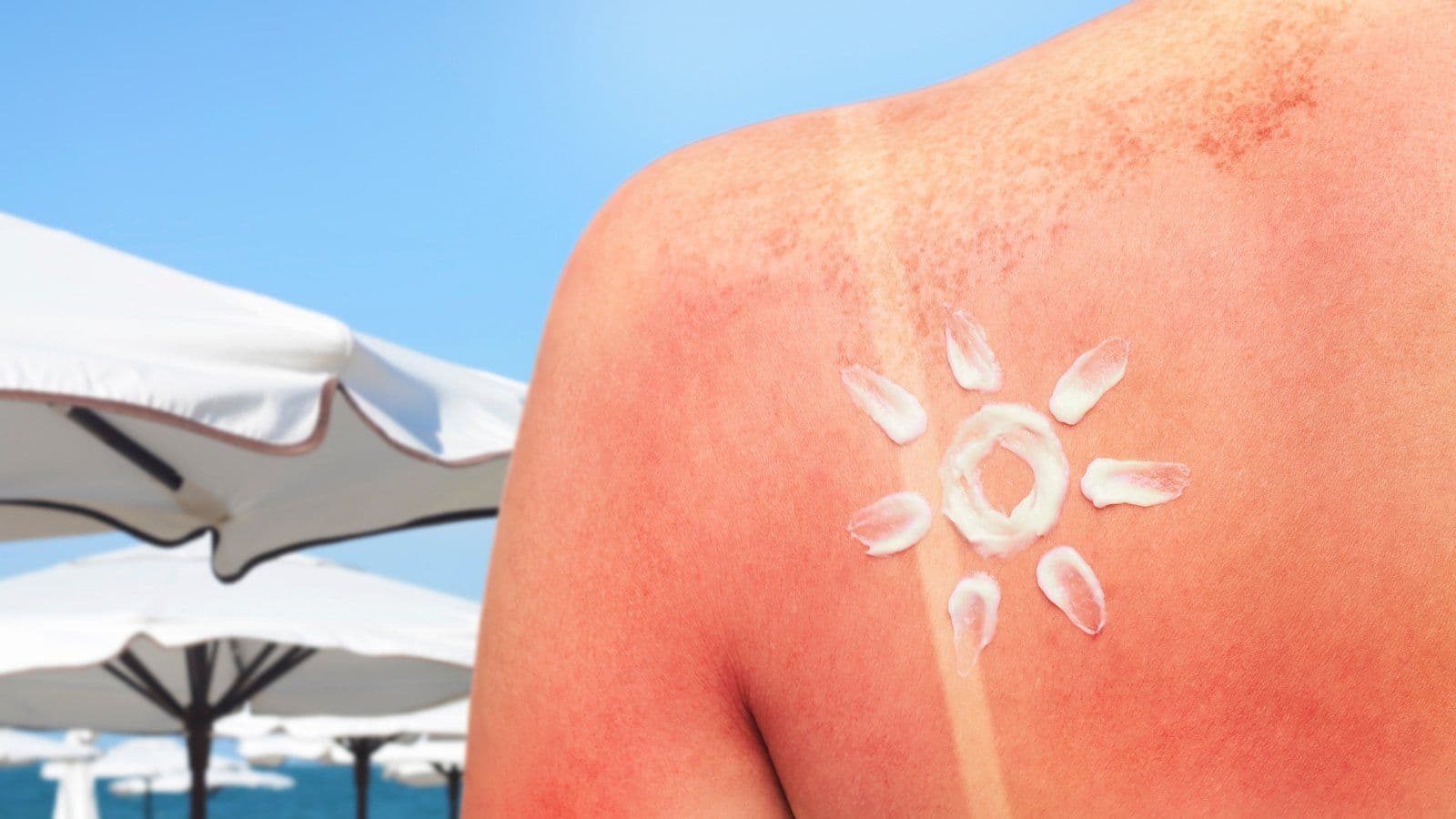
We readily talk about "making the most of the sun" as if it were an inexhaustible resource. The biological reality is different: every exposure draws on a reserve you can neither recharge nor buy back. This notion of sun capital, popularised by prevention campaigns, is no marketing image, it describes a real, well-documented mechanism. The good news: it's'always possible to slow its consumption, at any age.
1. What is the sun capital
The sun capital is the whole set of defences the skin has to repair the damage caused by ultraviolet rays. Three features define it: it's'acquired at birth, it depends on your phototype (the fairer the skin, the smaller the reserve), and it's non-renewable. Imagine a credit granted once and for all: each sun exposure takes a share of it. When the reserve runs out, the skin can no longer correct the errors accumulated in its DNA, and it's'on this ground that skin cancers can appear.
2. Why it never recharges: the skin's memory
With each exposure, UV causes lesions in the DNA of skin cells. Most are repaired, some damaged cells are eliminated, but a few survive keeping their errors, which they then pass on to their daughter cells. This silent, cumulative phenomenon explains two essential things: the skin keeps the memory of all its exposures, and a cancer can arise decades after the UV that started it. It's'also why tanning doesn't protect: it isn't a shield but the defensive reaction of an already-assaulted skin, the visible proof that damage has occurred.
3. Childhood and adolescence: when the counter runs fastest
Until puberty, the skin is thinner and its pigment system still immature: it's therefore particularly vulnerable to UV. And this is also the time of long holidays, outdoor days and prolonged swimming. A significant share of a whole life's'exposure is thus played out before age 18-20, estimates vary across studies, on the order of 25 to 50%. As a result, intense exposures and childhood sunburn are a major factor for melanoma in adulthood. Protecting a child from the sun means preserving their capital for a whole lifetime.
4. Sunburn: the marker that counts
Sunburn isn't a mere holiday nuisance: it's'a burn, hence a strong signal that the skin wasn't protected. The data converge: five or more severe sunburns over a lifetime are enough to clearly raise melanoma risk, and those occurring in childhood or adolescence weigh particularly heavily. That's precisely why your check-up looks at the number of severe sunburns you may have accumulated per decade: it's'one of the best indicators of how worn your capital is.
5. Myths about the sun
Many stubborn beliefs lead us to waste our capital without knowing it. Let's sort them out:
| Myth | What the science says |
|---|---|
| "I'm tanned, so I'm protected" | Tanning isn't protection: it's the mark of already-damaged DNA. At best it is the equivalent of an SPF of 3 to 4. |
| "The capital recharges in winter" | No. Damage accumulates for life. The skin keeps the memory of every exposure, never resetting the counter. |
| "Tanning beds prepare the skin for the sun" | False. They add a dose of UV and raise melanoma risk by 75% in those who start before 30. |
| "No sunburn, no risk" | False. Repeated exposure, even without visible burning, eats into the capital and damages the skin deep down. |
| "It's too late, the damage is done" | False. Protecting yourself reduces risk at any age. Every avoided exposure preserves what's left of the capital. |
Preserving what's left
No action rebuilds the sun capital, but all of them slow its consumption: seek shade between noon and 4 p.m., wear a hat, sunglasses and covering clothes, apply SPF 30 to 50 sunscreen reapplied regularly, and ban tanning beds. These habits matter at any age, and especially for children. Your health check-up is the ideal moment to take stock of your past exposure, your sunburns and your phototype, to tailor your vigilance for the years ahead.
💡 Key tips
- The sun capital is set at birth and depends on your phototype: it's non-renewable. You never "recharge" it, you can only slow its consumption.
- Tanning isn't a shield, it's'an alarm signal: it reflects already-damaged DNA and barely protects (the equivalent of just SPF 3 to 4).
- The skin has a memory. The UV you get today can trigger a cancer 10, 20 or 30 years later: that's why youthful exposures weigh so heavily.
- Five or more severe sunburns over a lifetime are enough to clearly raise melanoma risk, and childhood ones count double. It's'one of the markers in your check-up.
- It's never too late: protecting yourself reduces risk at any age. Shade at peak hours, covering clothes, high SPF and zero tanning beds are the best guardians of your capital.
Sources and references
- ●French National Cancer Institute (INCa) & Sécurité Solaire, Sun protection and the sun capital
- ●French Health Insurance (ameli.fr), Dangers of the sun and melanoma prevention (artificial tanning: +75% risk before 30)
- ●International Agency for Research on Cancer (IARC/WHO), UV radiation and tanning devices classified as definite carcinogens
- ●French Society of Dermatology, Cumulative effects of UV and photoprotection